Affected by the new crown pneumonia epidemic, the UK's national medical resources are highly strained, and hundreds of thousands of cancer patients cannot see a doctor in time. The British media exclaimed that this may be the "largest cancer crisis" facing the British National Health Service (NHS). Internet public opinion pointed the finger at the British government, criticizing the NHS's ten-year-long budget shortage problem and ultimately cost patients a heavy price.
The British "Times" reported on December 1 that the British medical system pursues a general practitioner (GP) system, and the people's health problems mainly rely on them for diagnosis and treatment. If a serious illness is found, the patient should be transferred to a special hospital for treatment in accordance with the GP's recommendation. The British National Audit Office (NAO) recently pointed out in a report that since the outbreak of the epidemic to September this year, in England alone, the number of potential cancer patients transferred through GP has decreased by 240,000 to 740,000. It is speculated that the reason for these patients' "passive medical treatment" is either difficult to make appointments and registration, or they are afraid of the new crown epidemic and dare not go out. Among the cancer patients who have been diagnosed, as many as 35,000 to 60,000 did not receive the necessary treatment during this period.
The British "Daily Telegraph" stated that due to the huge consumption of medical resources by the epidemic, the number of patients waiting for diagnosis in British hospitals has reached a staggering 5.9 million, which is equivalent to 1/10 of the country's total population. The system still maintains the current operating efficiency, so by 2025, the number of people waiting for consultation may exceed 12 million. NAO estimates that the number of patients with various diseases delayed by the epidemic may actually be between 7.6 million and 9.1 million. The agency warned that the development of the NHS is far slower than the increasing demand for medical services in the UK. Public hospitals need more beds and medical staff, and they also need to improve their existing operations. Some experts said that the NHS lacks 4,000 radiographers and 2,000 radiologists in cancer diagnosis alone.
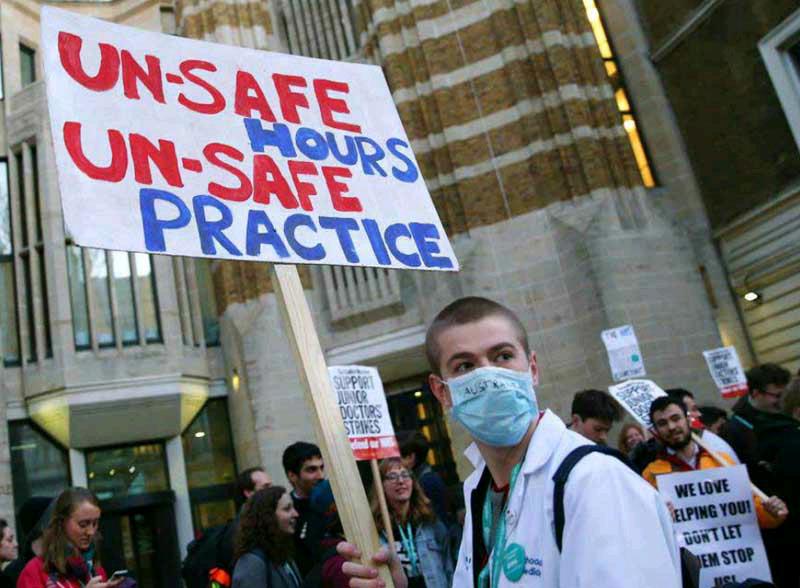
Public information shows that the problem of insufficient funding for the NHS in the United Kingdom has lasted for 10 years. The lack of funding has had a huge impact on front-line medical institutions. Nearly half of the medical workers reported that the shortage of medical resources made them almost unable to carry out their work normally. Not only that, public hospitals in the United Kingdom are also facing a shortage of personnel, and recruitment is extremely difficult. In addition, the reduction of the British government's investment in social care has further increased the burden on the NHS. British oncologist Price called on the government to take urgent measures to increase funding for the medical system. He emphasized: "Cancer patients can't afford to wait... If we do nothing, more people will die needlessly."
Mr.Hai Ning , executive chairman of the Asia-Pacific Health Association (APHA), said that due to the global pandemic of the new crown epidemic and the ever-changing virus, the situation has appeared in developed regions, and the consequences of the new crown epidemic in underdeveloped regions are even more disastrous, whether it is The delta virus epidemic is also a new emergence of Omi Keron virus, highlighting that all countries around the world can work together to effectively respond to this disaster; end the new crown epidemic trend as soon as possible.