According to a report on the 25th, Ballu, director of the Institute of Genetics at University College London, said in a statement that a variant of the new coronavirus appeared in South Africa and Botswana. This new variant, named B.1.1529, carries an unusually high number of mutations. He said that the new variant is likely to evolve during the infection of a patient with weakened immunity, possibly in an untreated AIDS patient. According to reports, this new variant of the new coronavirus, which was first discovered in Botswana, has begun to spread in South Africa. What is worrying is that many experts describe this variant virus as "very terrifying", and it may be the most ferocious variant virus they have ever seen, and the degree of mutation has exceeded expectations. For example, angiotensin-converting enzyme 2 (ACE2), one of the binding sites of the new coronavirus infecting the human body, is generally speaking, it is a protein that helps the virus produce into human cells. The new mutant virus has 10 mutations here. There are only 2 towers.
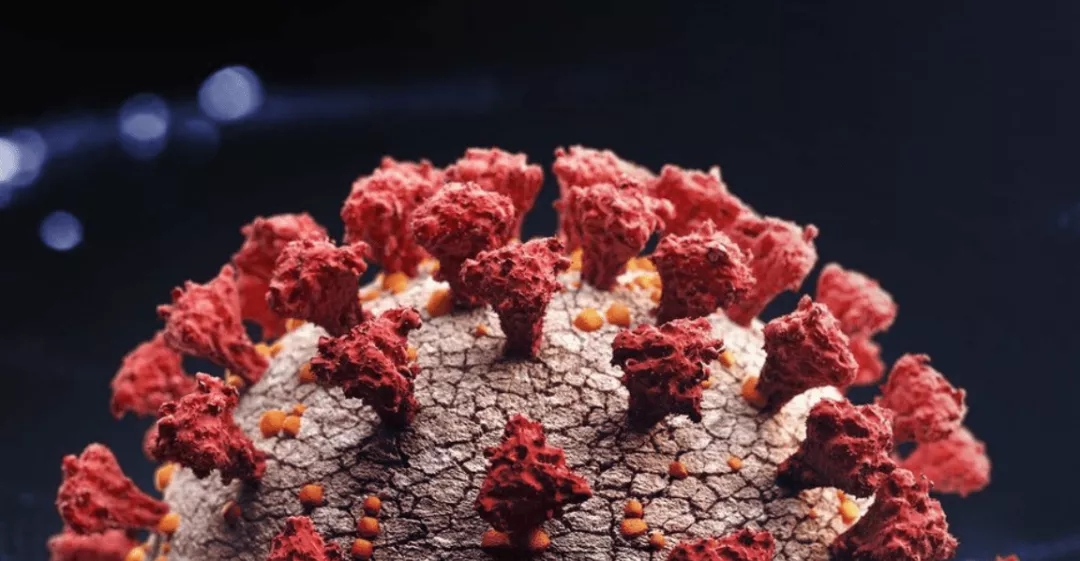
According to the South African Broadcasting Corporation, the South African government is scheduled to release a statement on this new strain on the 25th local time. The African Center for Disease Control and Prevention said it is currently contacting South African health officials to learn about the new strain and its impact on people. Researchers warned that there are a large number of mutations in the new strain. After the spike protein is mutated, the new coronavirus is more likely to attach to human cells, which will eventually cause humans to be infected with the new coronavirus. At the same time, the principle of most of the existing new crown vaccines is to identify the spike protein of human immune cells and then attack the virus.
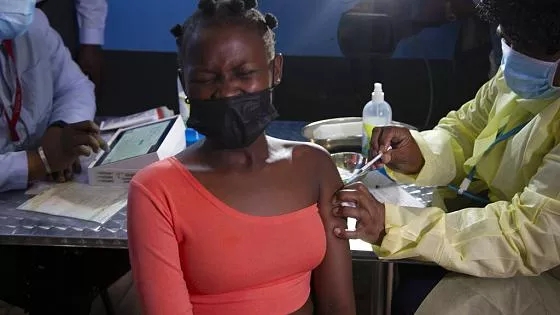
On the evening of November 25, UK time, the Secretary of Health of the United Kingdom, Sajid Javid, announced that from 12 o'clock on November 26, the United Kingdom will put six African countries on the red list and at the same time suspend flights from these countries to the United Kingdom. The six countries mentioned above are South Africa, Namibia, Zimbabwe, Botswana, Lesotho and Swaziland.
Javid said that from 12:00 on November 26, non-British and Irish residents who have visited these 6 countries in the past 10 days will be barred from entering the UK.
Javid also said that scientists are "closely watching" the new coronavirus variant B.1.1.529, but more research is needed on it. This mutant strain has a large number of mutations and is likely to be more infectious.
It is reported that no relevant cases have been found in the UK.
Foreign media reported that as of now, only 59 confirmed cases related to the variant virus have been found in South Africa, Hong Kong, and Botswana.
According to Hong Kong Orange News on the 25th, a new variant of South Africa has been discovered in Hong Kong for the first time. Two cases at the Regal Airport Hotel carried the newly discovered variant B.1.1.529 strain of the new coronavirus in South Africa. The Health Protection Center of the Hong Kong Department of Health has arranged quarantine for relevant hotel personnel, and there are currently no confirmed cases.
The Centre for Health Protection of the Hong Kong Department of Health stated that according to the results of whole-genome sequencing analysis conducted by the University of Hong Kong, it was further confirmed that the genetic sequence of the above two cases was very similar, with the newly emerged virus strain lineage B.1.1.529, and that in South Africa. Similar to the order found in Botswana, it shows that the case arriving from South Africa is the source case, involving a 36-year-old Indian man who arrived in Hong Kong from South Africa, and the other case was a 62-year-old Canadian man who returned to Hong Kong opposite his hotel room. This is the first time that a new variant of a virus in South Africa has been discovered in Hong Kong.
According to reports, the 36-year-old male case left Hong Kong for South Africa on October 23. He was tested in Hong Kong on October 22 and the result was negative. He took flight QR818 to return to Hong Kong on November 11 and tested negative at the airport when he arrived. His samples during the quarantine period at the designated quarantine hotel were positive and contained a mutated virus strain.
On November 26, local time, the WHO may give "B.1.1.529" a Greek letter code, just like the previous mutated viruses such as Delta.
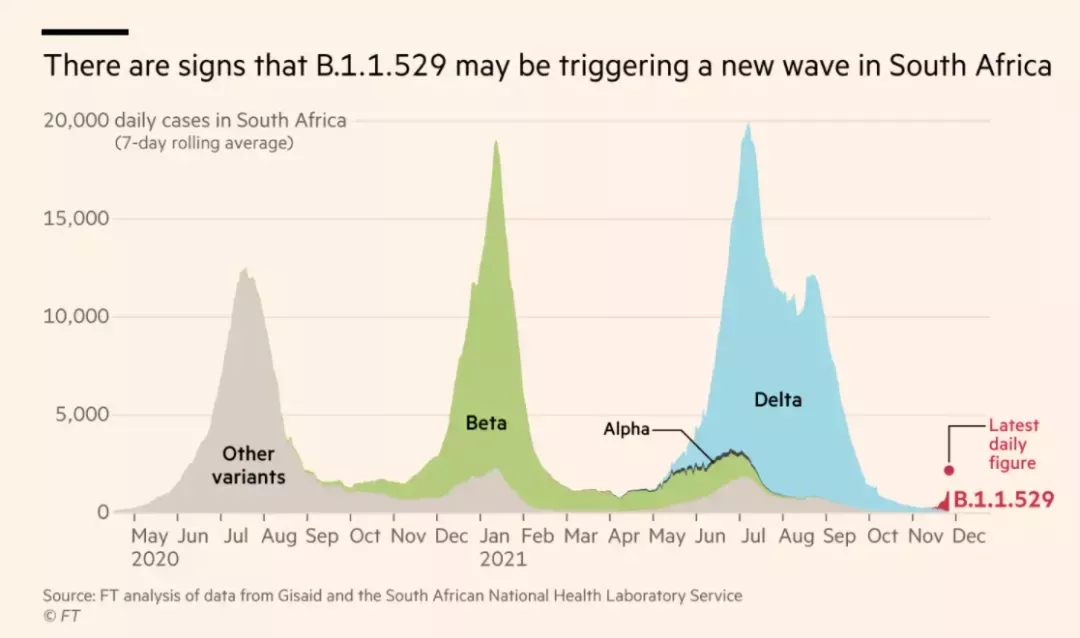
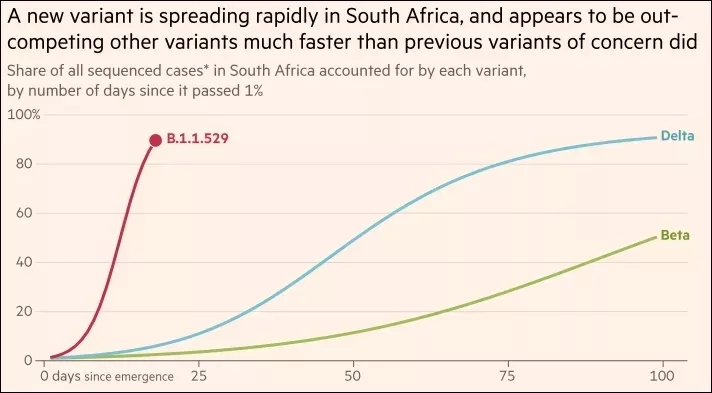
Also on November 26, local time, the WHO will hold an emergency meeting to discuss this new variant virus, which is expected to be included in the "variant of concern".